Imagine generating most of your revenue from customers you already have while many businesses still struggle to keep them coming back. In today’s competitive marketplace, retaining customers is far more profitable than acquiring new ones. This is where successful loyalty service makes all the difference.
A loyalty program is more than just offering discounts or rewards; it is a strategic tool that strengthens the relationship between a company and its clients. In fact, 65% of a company’s revenue comes from existing customers. The most successful loyalty programs focus on mutual benefits, ensuring that both the business and its customers experience value. By integrating customer engagement platforms and client retention programs, businesses can create long-lasting relationships that drive revenue and satisfaction simultaneously.
1. The Company Side of Customer Loyalty Software
For businesses, customer retention is a key driver of growth. While acquiring new customers is important, retaining loyal clients often leads to higher lifetime value and more sustainable profits. Implementing business loyalty solutions such as LoyaltyXpert enables companies to understand and engage their customer base effectively.
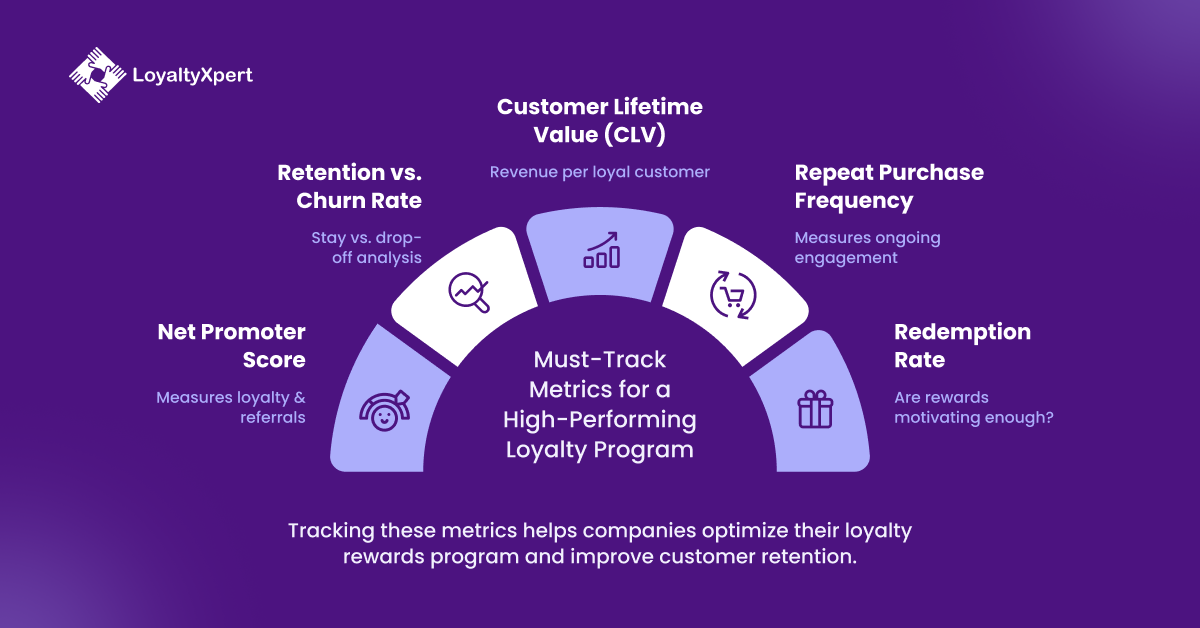
Key Metrics to Track
- Net Promoter Score (NPS): Measures client satisfaction and likelihood to recommend.
- Retention vs. Churn Rate: Tracks how many clients remain loyal over time.
- Customer Lifetime Value (CLV): Quantifies long-term revenue from repeat customers.
- Repeat Purchase Frequency: Indicates engagement and program effectiveness.
Considerations for a Successful Loyalty Service
- Customer segmentation: Identify new, active, inactive, and high-value clients.
- Purchase patterns: Analyze spending behavior and product preferences.
- ROI balance: Ensure program costs are justified by expected returns.
Using a Customer Loyalty Platform for Insights
- A customer loyalty platform gives businesses a unified view of their clients across multiple channels.
- It tracks purchase trends, engagement patterns, and reward redemptions in real time.
- With accurate insights, companies can tailor offers, strengthen relationships, and increase overall program effectiveness.
Improve Client Relationships with Customer Interaction Tools
- Customer interaction tools help brands understand how clients engage at every touchpoint—online or offline.
- These tools simplify communication, automate updates, and ensure quick responses.
- By capturing each interaction, companies can anticipate their business needs and deliver more personalized experiences that improve satisfaction.
Companies using loyalty management software or partnering with a loyalty service provider can tailor programs that resonate with their client base and maximize engagement. For example, a B2B company might implement a B2B loyalty platform to reward consistent partners, while a retail business may offer tiered incentives through a channel loyalty program.
? Fun Fact
Businesses that use tiered or personalized rewards see engagement increase by 20–30%, turning occasional buyers into repeat customers.
2. Strategy & Implementation for Loyalty Program Software
A well-structured loyalty program software is only effective if it is implemented strategically. The design should align with your company’s goals and integrate seamlessly with all customer touchpoints, ensuring consistent engagement across channels.
Implementation Channels
- Digital Channels: Websites, mobile apps, email campaigns, and social media platforms are critical for reaching customers where they already spend time. A strong customer engagement platform allows businesses to track interactions, deliver personalized offers, and provide instant updates on rewards or promotions.
- Physical Channels: For companies with offline operations, point-of-sale systems, in-store kiosks, or partner outlets can be integrated into the loyalty program. This ensures that customers receive rewards and recognition regardless of how they interact with the brand.
Key Elements of a Successful Strategy
- Rewards and Incentives: Designing a mix of monetary and non-monetary rewards keeps customers motivated. Examples include discounts, free products, early access to launches, or bonus points for frequent purchases. Using rewards program software ensures accurate tracking and seamless redemption.
- Personalization: Customers respond better when offers are tailored to their preferences. Using data analytics from loyalty management software, businesses can identify buying patterns and deliver targeted promotions.
- Gamification: Introducing game-like elements such as tiers, badges, or challenges encourages continued engagement. Gamification can turn routine transactions into an enjoyable and rewarding experience.
Leverage Consumer Behavior Data for Targeted Rewards
- Understanding consumer behavior allows brands to identify what motivates different customer segments.
- By analyzing customer data such as purchase history, browsing patterns, and activity levels, companies can design more relevant rewards.
- This leads to higher participation, improved personalization, and stronger customer commitment over time.
Engage Customers with Gamified Experiences
- Gamified elements such as badges, challenges, streaks, and bonus missions encourage customers to participate repeatedly.
- These experiences turn ordinary interactions into enjoyable rewards, making customer loyalty programs more exciting.
- When the customer journey is entertained and valued, they naturally return more often and engage more deeply with the brand.
Continuous Improvement
No strategy is perfect from the start. Analytics and feedback are essential for refining the loyalty program. Tracking engagement, redemption rates, and customer feedback helps businesses tweak rewards, channels, and communication to enhance effectiveness. Partnering with a loyalty service provider can simplify this process, providing actionable insights for continuous growth.
3. The Client Side of Customer Loyalty Programs
Clients are the heart of any loyalty program, and their needs vary widely. Some prioritize excellent service, some focus on competitive pricing, while others are motivated by rewards and recognition.
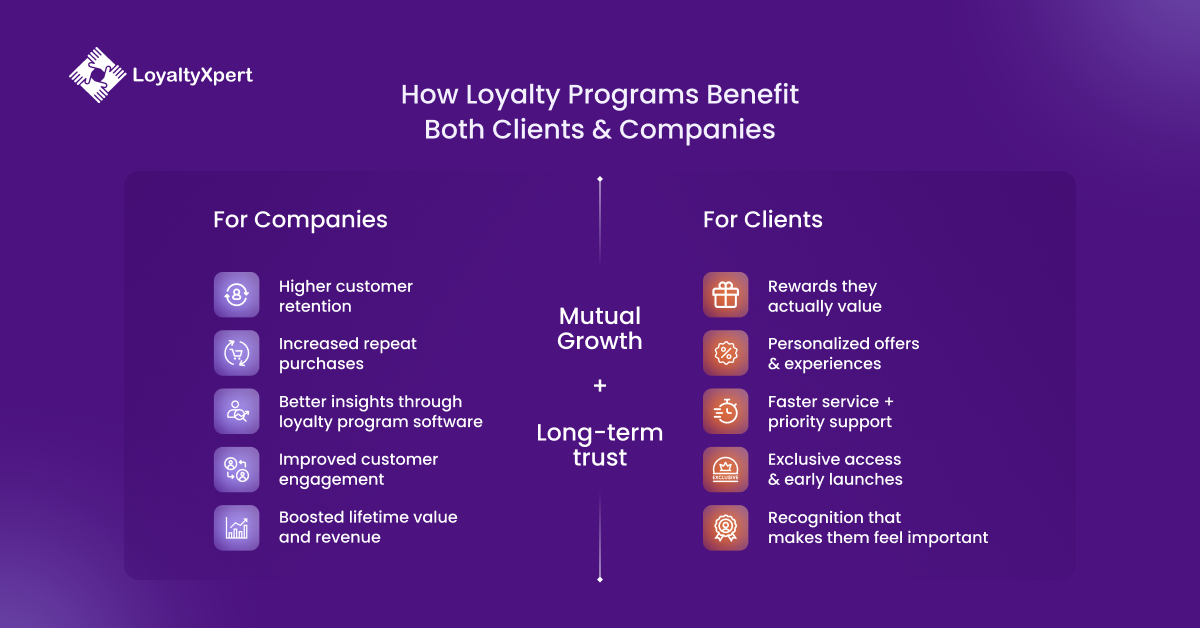
How to Make Loyalty Programs Client-Centric
- Collect and act on client feedback.
- Offer tiered programs or personalized experiences.
- Ensure participation is simple and communication is clear.
Tangible Benefits for Clients
- Discounts, early access to products, or faster support.
- Referral bonuses for bringing in new customers.
- Recognition programs that make clients feel valued.
Offer Digital Stamp Cards for Convenience
- Digital stamp cards modernize traditional loyalty stamps by making them accessible on mobile devices.
- Clients can easily collect stamps on every purchase without worrying about losing physical cards.
- This creates a smooth, convenient reward journey that encourages frequent visits and higher satisfaction.
By designing loyalty programs with the client in mind, companies can increase engagement and foster long-term loyalty. Integrating a rewards program software or customer engagement platform can enhance this experience and provide measurable results.
? Fun Fact
Clients are more likely to refer friends when they feel recognized and rewarded, meaning a strong loyalty program can drive both retention and new customer acquisition.
4. Measuring Success Through Customer Engagement
Measuring the effectiveness of a loyalty program is vital to ensure that both the company and its clients benefit. Research shows that increasing customer retention by just 5% can boost profits by 25–95%. Without monitoring, it’s difficult to know whether the program is driving engagement or revenue.
Key Metrics
- Engagement Rate: Measures the percentage of customers actively participating in the program. High engagement indicates that the program resonates with your audience.
- Redemption Rate: Tracks how often customers redeem points or rewards. A low redemption rate could signal that rewards are either unattractive or hard to access.
- Repeat Purchase Rate: Determines the frequency of repeat sales transactions from loyal customers. This directly impacts client retention programs and overall revenue.
- Customer Satisfaction and Loyalty Scores: Surveys, Net Promoter Scores (NPS), and feedback help assess client satisfaction. High satisfaction often translates into long-term loyalty and referrals.
Drive Loyalty Through Personalized Rewards
- Personalized rewards acknowledge individual preferences, making each customer feel valued and understood.
- Whether it’s bonus points on favorite products or exclusive offers, customization increases emotional connection.
- These tailored experiences not only drive loyalty but also boost repeat purchase rates and long-term trust.
Practical Example
Consider a retail business using a business loyalty solution: After implementing tiered rewards and personalized offers, engagement may increase by 30%, repeat purchase rates by 20%, and NPS scores may rise as customers feel valued and appreciated. This demonstrates the tangible impact of a well-designed loyalty program.
5. Steps to Build Win-Win Customer Loyalty Solutions
Creating a loyalty program that benefits both the company and clients requires a structured, stepwise approach.
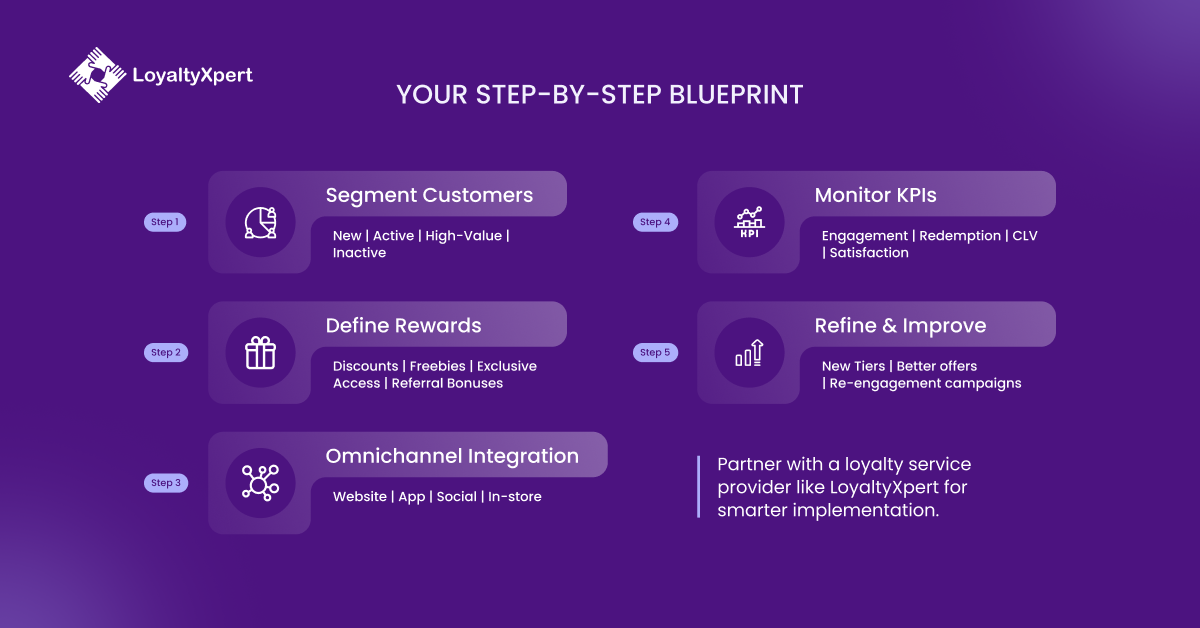
Step 1: Identify and Segment Your Customers
- Analyze your customer base to categorize them by behavior, purchase frequency, and value.
- Use segmentation to tailor rewards for different groups: new clients, high-value customers, and inactive clients.
Step 2: Define Clear Rewards and Benefits
- Decide what types of rewards will motivate your clients. Examples include discounts, exclusive access, free products, or referral bonuses.
- Ensure rewards are meaningful but sustainable for the business. Using loyalty program software can help track points, redemption, and reward allocation.
Step 3: Integrate Across Multiple Channels
- Deliver a seamless experience across all touchpoints—website, mobile app, social media, and in-store.
- Ensure the loyalty program is easy to join and participate in. Integration with customer engagement platforms makes tracking and reporting simple for both clients and companies.
Step 4: Monitor KPIs and ROI
- Track metrics like engagement rate, redemption rate, repeat purchases, and customer satisfaction.
- Measure ROI to ensure the program is financially sustainable. Regularly reviewing transactional data helps identify underperforming areas and optimize campaigns.
Step 5: Refine Strategy Based on Analytics and Feedback
- Use insights from analytics and client feedback to adjust the program. For example:
- Introduce new reward tiers for highly engaged clients.
- Modify communication channels based on preferences.
- Update incentives for inactive clients to encourage re-engagement.
- Partnering with a loyalty service provider can simplify this refinement, helping businesses implement customer loyalty software effectively.
No CTA found.
By following these steps, companies can create a loyalty program that drives engagement, increases retention, and delivers measurable results while keeping clients satisfied and motivated.
Add Cancel Anytime Flexibility for Clients
- Allowing customers to cancel anytime removes hesitation and increases sign-ups for loyalty-based subscriptions or plans.
- This flexibility builds trust by showing the brand prioritizes customer comfort over rigid commitments.
- Clients are more likely to join and stay engaged when they feel in control of their membership decisions.
Conclusion
A successful loyalty program works for both companies and their clients. When businesses invest in the right loyalty program software, they not only retain customers and clients but also enhance satisfaction, trust, and long-term engagement. Clients benefit from rewards, personalized experiences, and recognition, while companies enjoy increased repeat purchases, higher lifetime value, and improved brand reputation.
By combining strategic design, multi-channel implementation, and continuous monitoring, companies can create customer loyalty solutions that deliver measurable results. Whether it is through a B2B loyalty platform, a channel loyalty program, or rewards program software, the focus should always be on creating a balanced, mutually beneficial relationship.
Want to create a loyalty program that drives growth and delights your customers? Contact LoyaltyXpert today for a free demo and see how our solutions can transform your client engagement strategy.