Many brands proudly showcase millions of loyalty members, high engagement rates, and growing reward redemptions. But when leadership asks a simple question, “How much revenue does our loyalty programs actually generate?”- the answers are often unclear.
This is the loyalty paradox. Engagement is high, but loyalty program value is difficult to prove in financial terms.
Today’s customers are overwhelmed with discounts, points, and cashback offers. Over time, this creates loyalty fatigue. Customers join programs, redeem rewards, and move on without forming a real connection with the brand. Brands become trapped in a discount cycle that erodes margins and weakens loyalty program ROI.
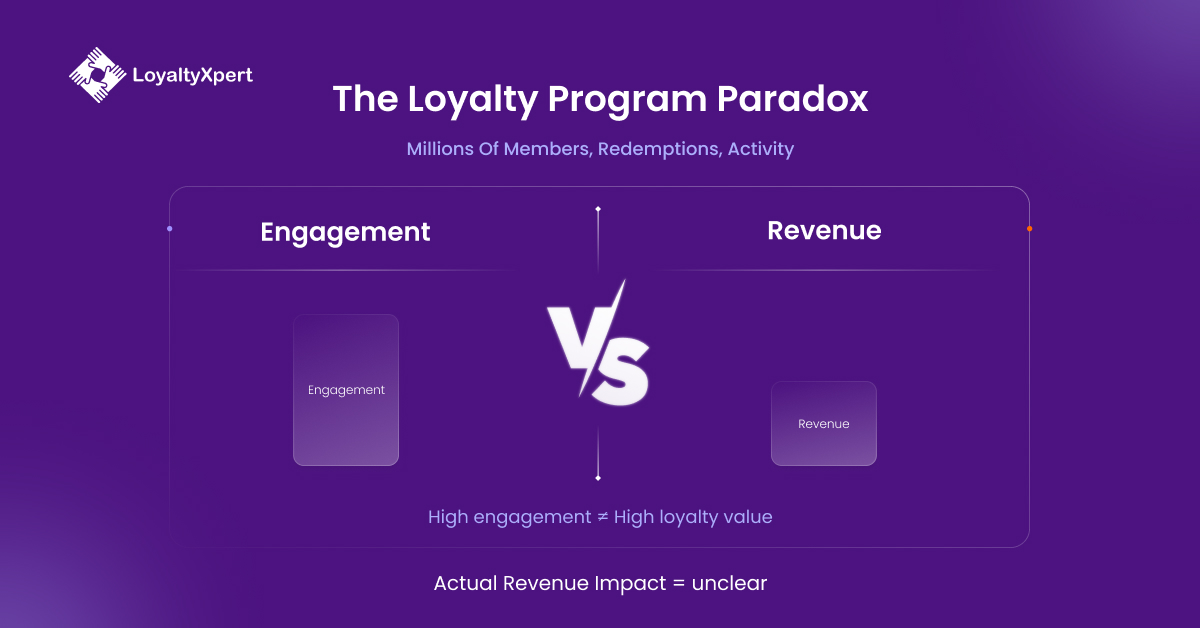
Some common challenges brands face include:
- Overdependence on discounts instead of meaningful rewards
- High engagement without measurable profitability
- Difficulty linking loyalty activity to repeat revenue
- Customers gaming the system for short-term benefits
To truly unlock loyalty program effectiveness, brands must rethink how loyalty creates business value, not just customer engagement.
Loyalty Programs as Revenue Infrastructure
Most businesses still treat loyalty programs as marketing campaigns. They launch points, run seasonal offers, and push email promotions. But modern brands see loyalty differently as a revenue infrastructure embedded into the business model.
A well-designed loyalty program influences how customers buy, how often they return, and how much they spend. It becomes a system that drives lifetime value rather than a tool for short-term promotions.
How does loyalty as a layer connect everything?
- Pricing strategy: Exclusive member pricing, bundles, and tier-based benefits
- Product strategy: Early access, premium tiers, and member-only offerings
- Customer experience: Personalized journeys, priority support, and recognition
- Revenue strategy: Upsell, cross-sell, and subscription retention
When loyalty is designed as infrastructure, it directly impacts repeat purchases, average order value, and customer lifetime value. This is where loyalty program benefits for businesses become tangible and measurable.
Modern brands use loyalty program software and loyalty management platforms to automate this system, integrate it with CRM and commerce platforms, and create real-time reward experiences through app-based loyalty programs.
Instead of asking, “How many members do we have?” the smarter question becomes:
“How much predictable revenue does our loyalty program generate?”
Way #1: Behavior-Based Rewards That Drive Profit, Not Just Activity
Most loyalty programs reward customers for one thing, that is purchases. The more customers buy, the more points they earn. While this increases transactions, it doesn’t always increase profit.
To unlock real loyalty program value, brands must reward behaviors that improve margins, not just volume.
Think of loyalty as a tool to shape customer behavior. Instead of rewarding every transaction equally, reward actions that grow profitable revenue.
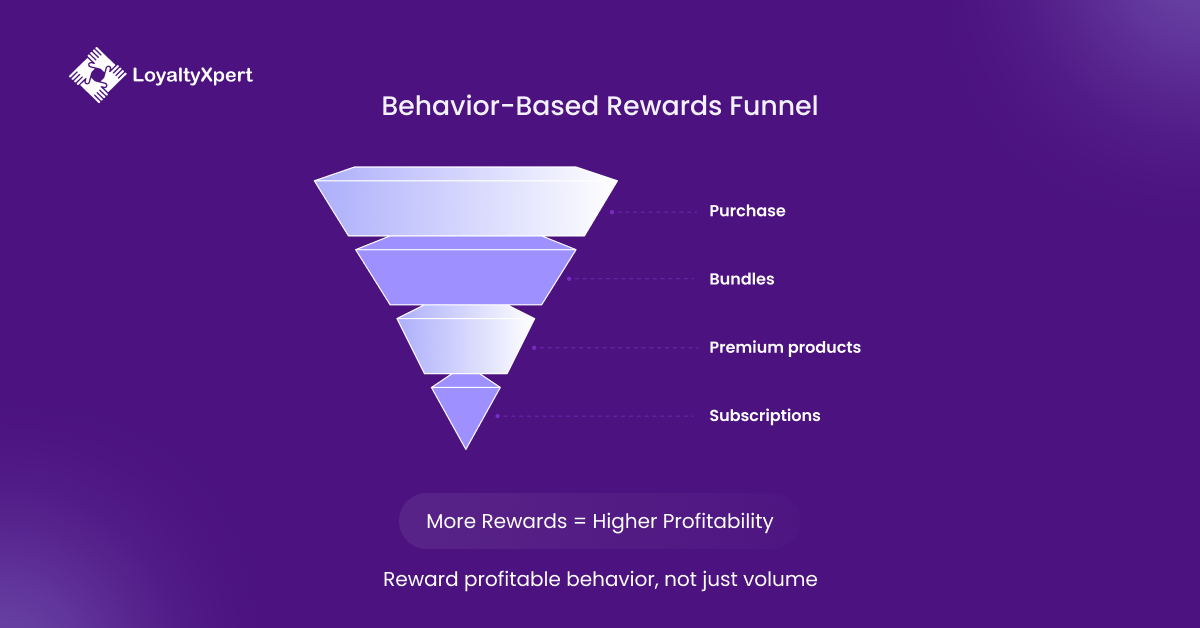
What behavior-based rewards include?
- Buying higher-margin products or premium categories
- Bundling products instead of single-item purchases
- Cross-selling complementary products
- Upselling to premium tiers or subscriptions
- Completing full purchase journeys (e.g., product + add-ons)
This approach improves loyalty program ROI because rewards are tied to strategic business goals, not generic purchases.
Smart brands use loyalty program software to set rule-based triggers. For example, a customer earns bonus points for choosing a premium SKU, renewing early, or hitting a quarterly purchase threshold. Over time, loyalty becomes a profit engine rather than a cost center.
Way #2: Personalization at Scale Using Loyalty Data Signals
Personalization is no longer a nice-to-have; it is expected. Customers want brands to understand their preferences, timing, and intent. Loyalty programs are one of the richest sources of behavioral data, making them powerful personalization engines.
Instead of segmenting customers into broad groups like “frequent buyers” or “high spenders,” modern brands personalize based on real-time signals.
What loyalty-driven personalization includes?
- Triggered rewards based on browsing or purchase behavior
- Personalized offers based on past category preferences
- Time-based nudges for repeat purchases
- Predictive rewards before churn happens
Static segmentation fails because customers change behavior quickly. Real-time loyalty signals help brands stay relevant, increasing loyalty program effectiveness and long-term engagement.
With a strong loyalty management platform, brands can connect loyalty data with CRM and marketing tools to automate personalized journeys. Many loyalty program companies in India now offer AI-driven personalization features to help brands scale this approach without manual effort.
When customers feel understood, not targeted, they stay longer, spend more, and advocate for the brand. That’s when the benefits of loyalty programs become truly visible.
💡 Did you know?
Personalized loyalty offers based on real-time behavior signals outperform static segmentation campaigns in both engagement and repeat purchase rates.
Way #3: Experience-Led Loyalty That Builds Emotional Switching Costs
Discounts are easy to copy. Experiences are not.
In 2026, customers don’t stay loyal because of points alone. They stay because they feel valued, recognized, and part of something exclusive. This is where brands unlock deeper loyalty program value by creating emotional switching costs.
When customers feel emotionally connected, switching to a competitor feels like losing a relationship, not just a brand.
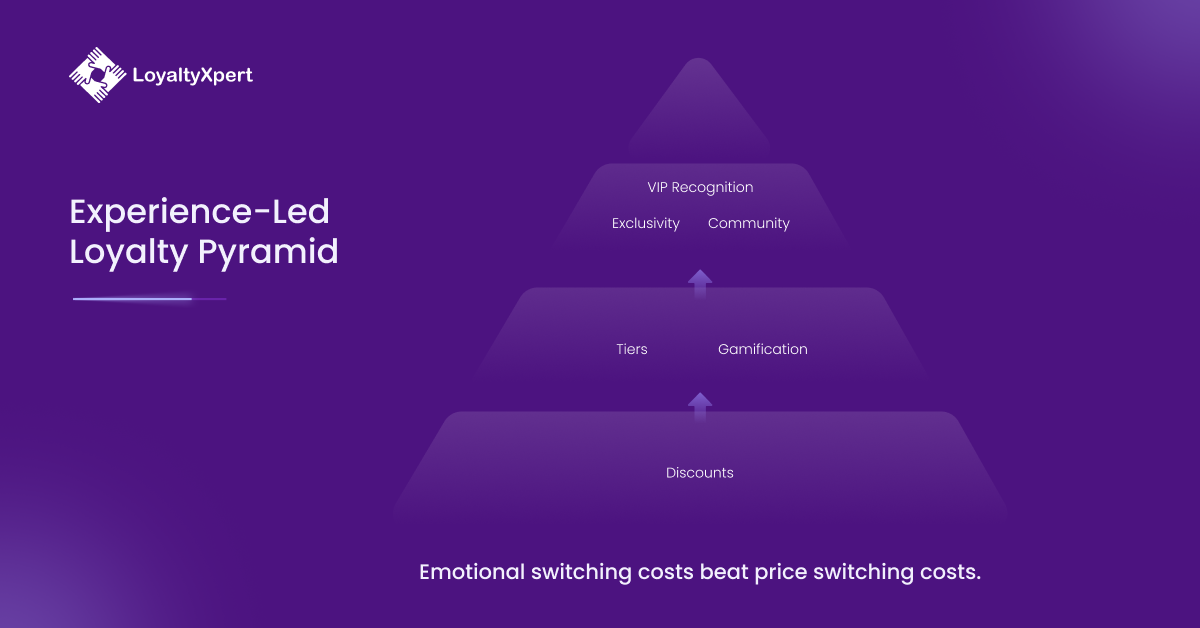
What experience-led loyalty strategies include?
- VIP access: Early product launches, exclusive events, premium support
- Gamification: Badges, milestones, progress levels, and challenges
- Community-driven loyalty: Member-only content, forums, and creator communities
- Status tiers: Silver, Gold, Platinum tiers with visible recognition
These mechanics go beyond transactional rewards. They turn customers into brand advocates.
Many app-based loyalty programs now integrate gamification and tiered status to increase daily engagement. Brands that implement these strategies see higher loyalty program effectiveness because customers interact with the brand even when they’re not buying.
In a world where products are similar and prices are transparent, experiences create differentiation. That’s one of the most underrated loyalty program benefits for businesses today.
Way #4: Ecosystem & Partner Loyalty to Expand Customer Value
Imagine a customer earning rewards not just from your brand, but from an entire ecosystem of partners. This is the future of loyalty.
Ecosystem loyalty programs expand the customer’s value by connecting multiple brands into a single reward network. This strategy significantly boosts loyalty program ROI by increasing basket size and purchase frequency across categories.
What ecosystem-driven loyalty models include?
- Cross-brand rewards: Earn points with partner brands and redeem anywhere
- Partner marketplaces: Exclusive partner offers inside the loyalty app
- Subscription bundles: Loyalty perks bundled with subscriptions and services
- Coalition loyalty networks: Multiple brands sharing a unified rewards currency
For example, a customer buying paint could earn rewards for tools, contractor services, or home décor partners. This creates a connected journey instead of isolated purchases.
Leading loyalty program companies in India are increasingly building coalition programs using advanced loyalty program software and centralized loyalty management platforms. These systems help brands manage partners, rewards, and analytics in one place.
Ecosystem loyalty increases customer lifetime value while reducing churn, making it one of the most powerful growth levers in modern loyalty strategies.
Way #5: App-Based Loyalty Platforms for Real-Time Engagement
Today’s loyalty programs live in pockets, not wallets.
Plastic cards and paper vouchers are fading fast. Customers expect instant access, real-time rewards, and seamless experiences. That’s why an app-based loyalty program is now the foundation of modern loyalty program value creation.
Mobile-first loyalty platforms help brands stay connected with customers beyond transactions.
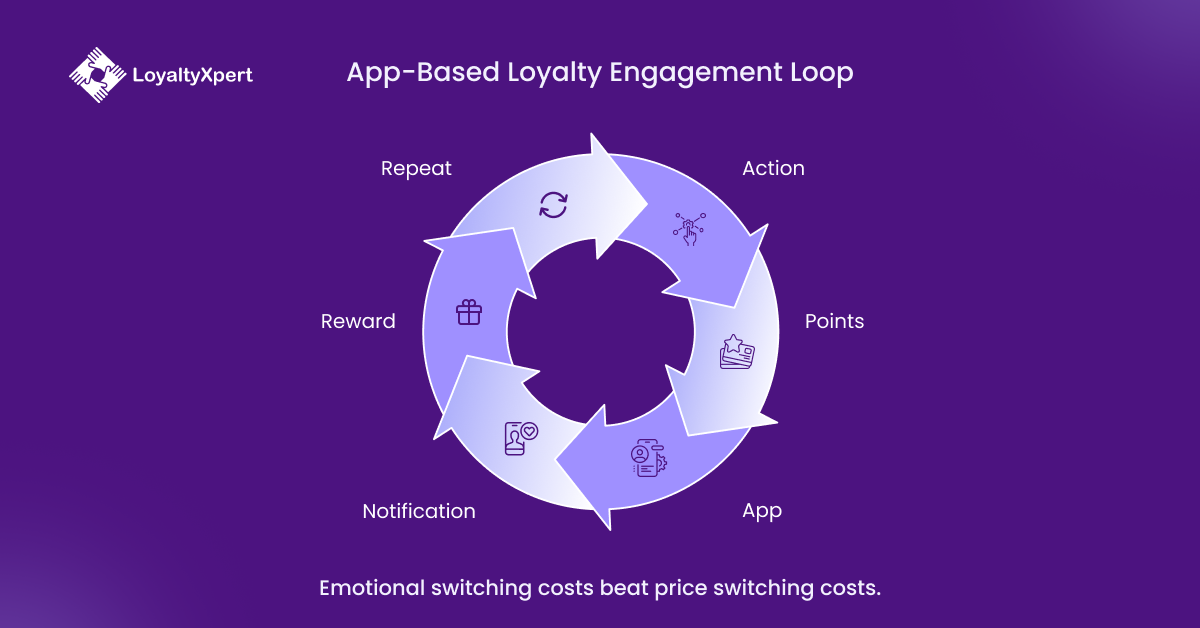
What are the key capabilities of modern loyalty platforms?
- Real-time points visibility: Customers see rewards instantly after every action
- QR codes and digital wallets: Easy earning and redemption across online and offline channels
- Instant redemption: No waiting periods or manual approvals
- Push notifications: Timely nudges for offers, milestones, and rewards
Unlike traditional systems, digital loyalty platforms create continuous engagement loops. Customers check their status, unlock rewards, and interact with the brand daily, not just during purchases.
Advanced loyalty program software also integrates with CRM, POS, and marketing automation tools. This allows brands to personalize rewards, automate campaigns, and track customer journeys in one unified loyalty management platform.
Brands using mobile-first loyalty systems report higher participation rates and improved loyalty program effectiveness, proving that digital loyalty is no longer optional; it’s a growth engine.
💡 Did you know?
App-based loyalty platforms drive habitual engagement because customers check points, tiers, and rewards outside of purchase moments, turning loyalty into a daily interaction layer.
Loyalty Metrics That Tie to Revenue
Many brands track loyalty engagement. Few track loyalty revenue.
To maximize loyalty program ROI, brands must measure metrics that link directly to business growth, not just participation.
What revenue-driven loyalty metrics include?
- Customer Retention Rate (CRR): Percentage of customers who return over time
- Customer Lifetime Value (CLV): Total revenue generated per customer
- Revenue retention: Repeat purchase revenue vs. churned revenue
- Engagement depth: Frequency, redemption rate, tier progression, and app usage
Vanity metrics like sign-ups or points issued look impressive, but don’t reflect real business impact. Leadership teams need clarity on whether loyalty programs increase revenue, margin, and lifetime value.
A structured loyalty measurement framework connects rewards costs to incremental revenue, helping brands optimize incentives and prove loyalty program benefits for businesses with data.
Leading loyalty program companies in India increasingly focus on analytics-driven loyalty models to justify investments and scale programs with confidence.
Cost vs Value: What Brands Should Expect from Modern Loyalty Programs
One of the most common questions marketers ask is: How much does a loyalty program really cost, and is it worth it?
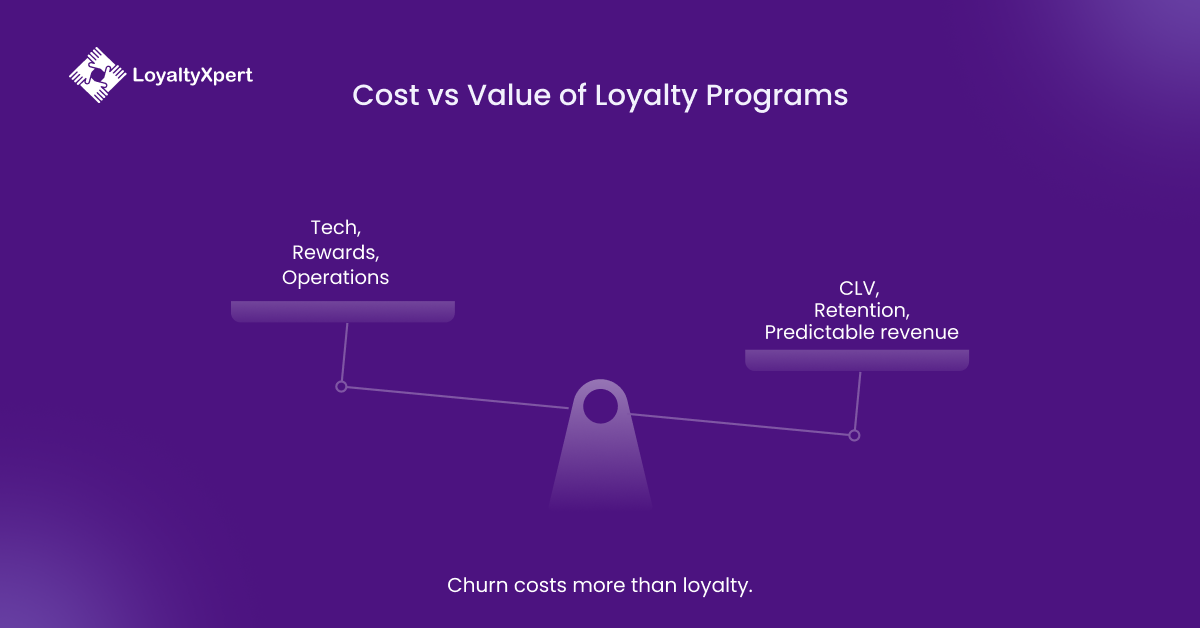
The answer depends on how you design it and what you expect from it. Modern loyalty programs are not just expense lines; they are revenue systems that generate measurable loyalty program value over time.
Typical Loyalty Program Cost Components
1) Technology & Platform Costs
- SaaS-based loyalty program software: Lower upfront cost, subscription-based
- Custom-built platforms: Higher initial investment, greater flexibility
- Integration with CRM, POS, and marketing tools
2) Reward & Incentive Costs
- Discounts, cashback, and vouchers
- Experiential rewards and partnerships
- Tier-based benefits and exclusive access
3) Operational & Marketing Costs
- Campaign design and automation
- Communication and creative assets
- Analytics and optimization
No CTA found.
How Brands Justify Loyalty Program ROI?
Smart brands don’t ask, “What does loyalty cost?”
They ask, “What does churn cost?”
ROI models typically focus on:
- Increased repeat purchase frequency
- Higher average order value
- Longer customer lifetime value
- Reduced acquisition dependency
When designed strategically, the benefits of loyalty programs far outweigh the costs. In fact, the cost of not having a structured loyalty program often shows up as declining retention, margin erosion, and unstable revenue.
Leading loyalty program companies in India are shifting conversations from program costs to predictable revenue impact because loyalty is now a growth investment, not a marketing expense.
Summing It Up
In modern organizations, loyalty is no longer a campaign, but it is an operating model. Brands that treat loyalty as infrastructure consistently outperform competitors in retention, revenue stability, and customer lifetime value.
The strongest loyalty program value emerges when behavioral data, engagement triggers, and technology orchestration work together to influence profitable customer actions. This is where loyalty shifts from a marketing expense to a growth multiplier.
Solutions such as LoyaltyXpert enable brands to design and scale this model through an integrated loyalty management platform. If you’re evaluating how to modernize your loyalty strategy, book a demo or connect with our team for a strategic discussion.