[key_highlights]
Most brands believe they have a customer acquisition problem. In reality, they have a customer retention problem, one that quietly drains revenue long after the campaign dashboards look healthy.
In 2026, acquiring customers costs more than ever. Attention spans are shorter, switching barriers are lower, and customers are overwhelmed with choices. Even brands delivering “good” customer experiences are seeing repeat rates decline. This is where customer retention becomes the real growth lever, not just a post-sale metric.
What’s driving this silent crisis?
- Rising acquisition costs that make churn financially painful
- Subscription and brand fatigue, especially in digital-first markets
- Low tolerance for friction, delays, or inconsistent experiences
- Parity in products, where differentiation is no longer obvious
The challenge is clear: customer retention is no longer a byproduct of good CX. It must be intentionally designed, measured, and managed as a business system.
1. How Customer Retention Has Evolved in 2026?
To understand how to improve customer retention today, marketers must first unlearn how it was approached in the past.
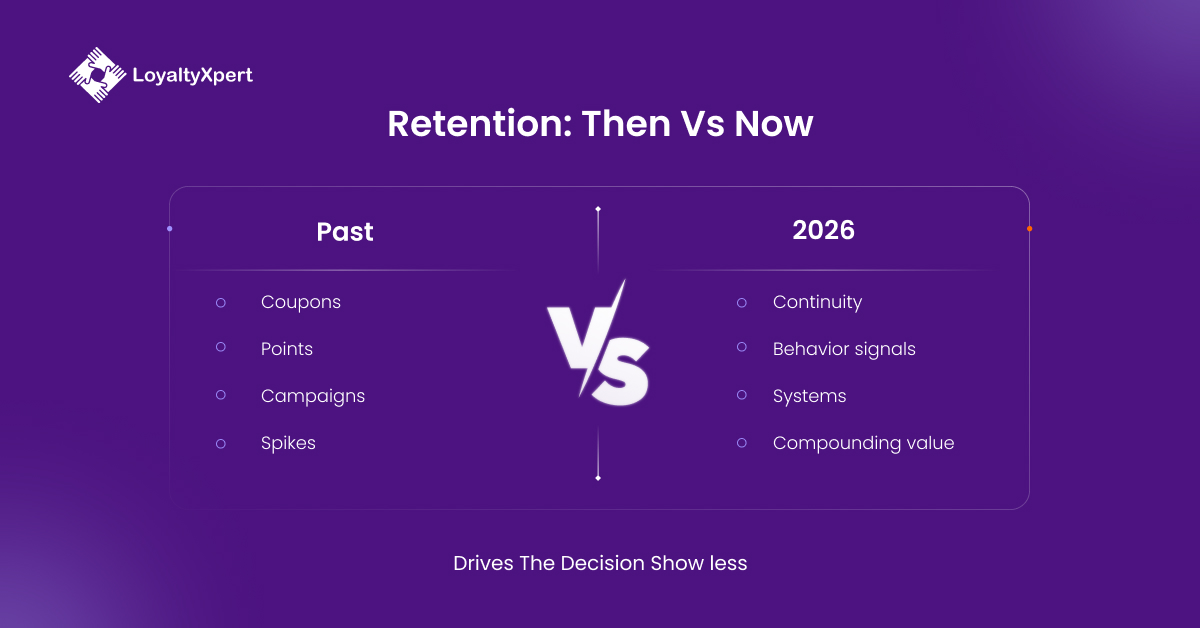
Earlier, retention was driven by discounts, points, and occasional engagement campaigns. Today, those tactics still exist, but they no longer work in isolation. Modern customer retention is shaped by continuity, relevance, and predictability.
Here’s how retention thinking has evolved in 2026:
- From discounts to value continuity
Customers stay when value compounds over time, not when prices drop temporarily. Retention now depends on how consistently a brand delivers outcomes, not offers.
- From loyalty points to behavior intelligence
Knowing what customers do matters more than knowing who they are. Brands are shifting focus to behavioral signals like usage, engagement, frequency, and intent.
- From campaigns to systems
Retention is no longer owned by a single campaign or team. It is built through connected systems that combine engagement, service, data, and loyalty initiatives.
This shift also changes how marketers define what is customer retention. It is no longer just repeat purchase; it is sustained engagement, trust, and long-term value creation. And in 2026, brands that fail to recognize this evolution risk losing customers quietly, even while growth metrics appear stable.
2. Retention Is a System, Not a Campaign
One of the biggest reasons customer retention efforts fail is simple: they are treated like campaigns.
A festive offer here, a discount there, a re-engagement email when churn spikes. These actions may create short-term movement, but they rarely build long-term customer retention. In 2026, customers don’t stay because of occasional incentives. They stay because the entire experience works consistently.
Modern customer retention is an operating system that is quiet, continuous, and deeply embedded into how a business runs.
Why one-off retention tactics fall short?
- They reward transactions, not relationships
Customers return for predictable value, not surprise discounts.
Marketing runs offers, support handles issues, product teams move independently, and customers experience the gaps.
By the time a campaign is triggered, disengagement has already begun.
High-performing brands approach customer retention as a long-term model, not a short-term fix. This means alignment across key functions:
- Marketing focuses on relevance and lifecycle communication
- Product ensures usability, reliability, and ongoing value
- Customer support shifts from reactive to proactive engagement
- Data & technology connect behaviors across touchpoints
This is where loyalty systems, app-based loyalty programs, and integrated loyalty management platforms come into play, not as add-ons, but as foundational layers that support consistent retention outcomes.
💡 Did you know?
Over 60% of customers stop buying from a brand not because of price, but due to friction, inconsistency, or poor post-purchase experience.
3. The New Retention Metrics That Actually Matter
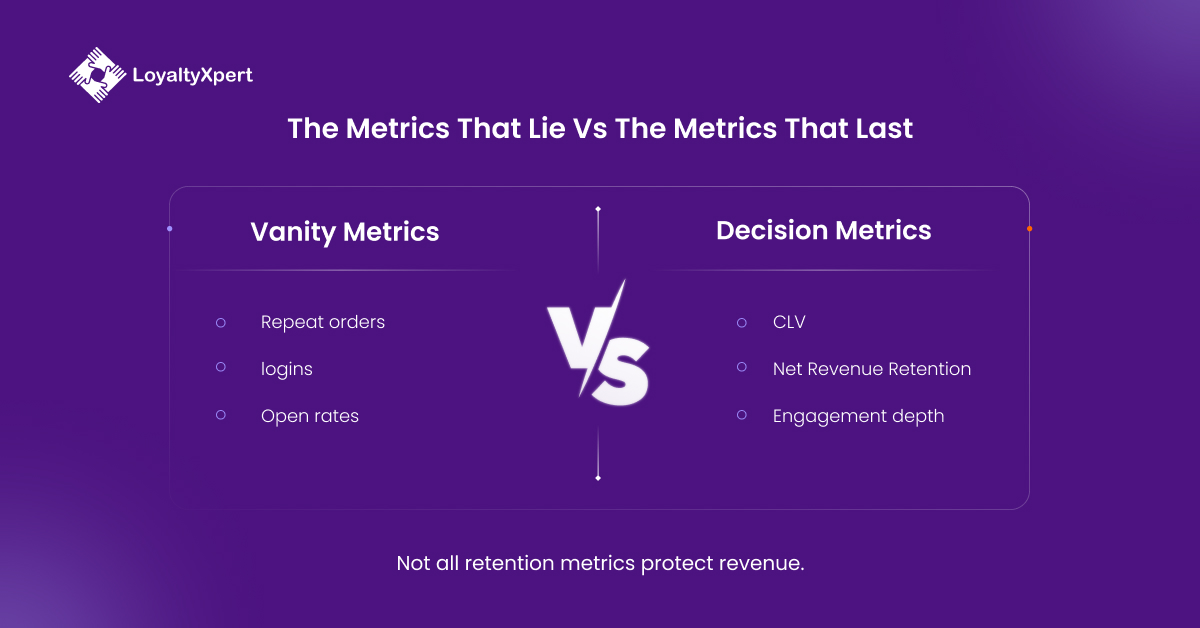
You can’t improve customer retention if you don’t measure the right things. Yet many marketers still rely on surface-level numbers that look good on reports but reveal very little about actual loyalty.
In 2026, measuring customer retention means moving beyond volume-based metrics and focusing on value, behavior, and sustainability.
Which customer retention metrics truly matter today?
- Customer Retention Rate (CRR)
This remains a core indicator, but context matters. What is a good customer retention rate varies by industry, pricing model, and buying frequency. The real insight lies in trend direction, not isolated percentages.
- Customer Lifetime Value (CLV)
CLV connects retention to revenue. When customer retention improves, CLV compounds, making this metric critical for marketing, finance, and leadership alignment.
- Revenue Retention vs. Logo Retention
Retaining customers who reduce spending is not the same as retaining revenue. High-growth brands prioritize net revenue retention over just keeping logos on the books.
- Engagement Depth, Not Frequency
How customers engage matters more than how often. Are they exploring features, redeeming value, participating in loyalty programs, or interacting meaningfully with the brand?
No CTA found.
For marketers asking how to measure customer retention effectively, the answer lies in connected insights. This is where modern loyalty program software and retention platforms help unify engagement data, transactional behavior, and reward interactions into one measurable system.
Retention in 2026 is not about tracking more metrics, but it’s about tracking the right ones and acting on them before customers drift away.
4. Personalization at Scale
For years, marketers believed personalization meant segmentation. Gold customers got one message, new users another. That approach no longer holds.
In 2026, customer retention is driven by signals, not static segments. Customers expect brands to respond to what they do, not who they were labeled as months ago.
When modern personalization works?
- Behavior-led, not profile-led
Browsing patterns, usage drops, reward redemptions, and support interactions tell a far clearer story than demographics.
The moment a customer disengages, delays a purchase, or changes behavior, the system should respond automatically.
AI-driven models now anticipate churn risks before customers consciously decide to leave.
Batch campaigns struggle here because they assume customers behave linearly. They don’t. This is why marketers are increasingly relying on loyalty program software and retention platforms that translate live customer signals into timely, relevant engagement without manual intervention.
5. Loyalty Programs in 202, What Works, What Doesn’t?
Loyalty programs haven’t disappeared, but they’ve changed shape.
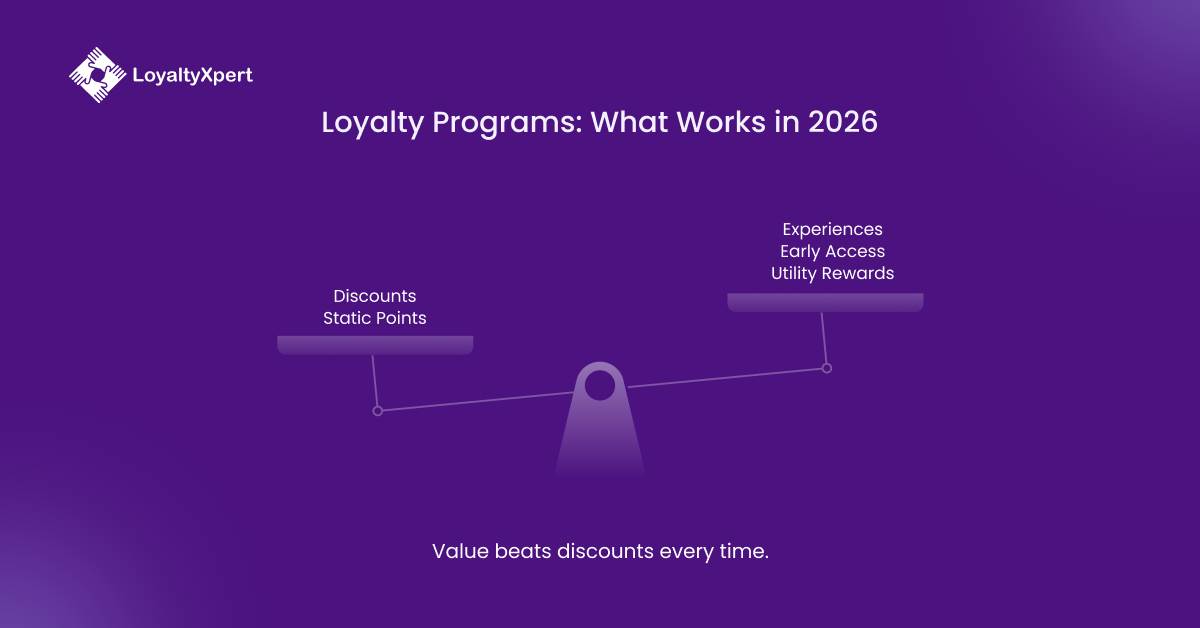
Discount-heavy programs that once boosted short-term sales now struggle to sustain customer retention. Customers engage, redeem, and disappear. The value exchange feels transactional, not meaningful.
What still works in 2026?
Early access, exclusive experiences, utility-driven benefits, and recognition outperform flat price cuts.
Customers remember frictionless journeys, not point balances.
- App-based loyalty programs
Mobile-first programs create habitual engagement, visibility, and ease of participation.
What’s losing relevance?
- Static point systems with limited flexibility
- Rewards that feel disconnected from actual customer needs
- Programs that operate in isolation from product and service experiences
This shift explains why brands are moving toward loyalty management platforms that blend engagement, rewards, and insights rather than running loyalty as a standalone marketing tactic.
6. Retention Technology Stack: Enabler, Not Overhead
Many retention strategies fail not because of poor intent, but because of fragmented systems.
Marketing tools track campaigns. CRM systems store customer data. Loyalty platforms operate separately. The result? Disconnected experiences that weaken customer retention instead of strengthening it.
In 2026, retention technology must act as an enabler:
Customer actions, rewards, engagement, and feedback must live in one connected ecosystem.
- CRM and loyalty integration
Retention improves when loyalty insights inform sales, service, and marketing decisions in real time.
- Automation and orchestration
Manual follow-ups don’t scale. Smart automation ensures consistent experiences without operational overload.
Disconnected tools increase costs, slow response times, and reduce visibility into what’s actually driving loyalty. This is why marketers evaluating how to measure customer retention increasingly prioritize platforms that combine analytics, engagement, and loyalty into a single operational layer.
Retention technology, when designed well, doesn’t add complexity; it actually removes it.
💡 Did you know?
Brands that integrate CRM, loyalty, and support systems see up to 30% higher retention, compared to those running siloed campaigns.
7. Trust, Privacy & Transparency as Retention Drivers
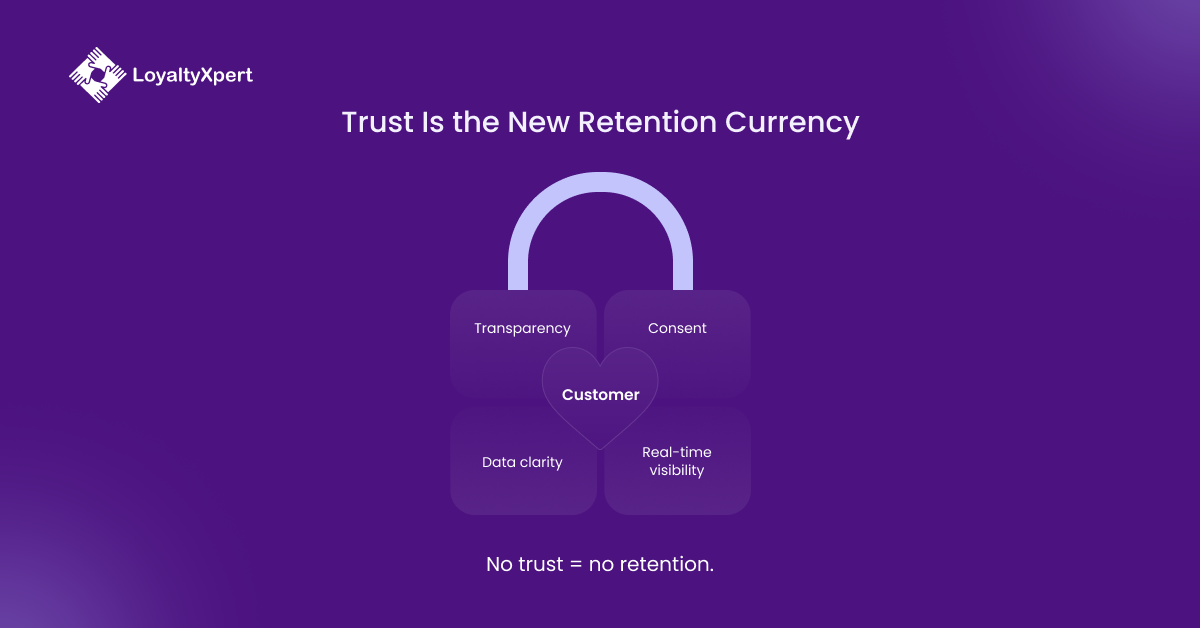
In 2026, customer retention isn’t just about rewards or experiences, but it’s about trust. Customers are increasingly aware of how their data is used, and brands that fail to respect privacy risk losing loyalty at the first misstep.
What Modern retention strategies rely on?
Collect and use customer data responsibly. Customers reward transparency by engaging more deeply with brands they trust.
Always seek explicit permission before communication or personalization. Customers are more likely to respond positively when they know their preferences are respected.
- Transparent rewards and benefits
Hidden terms, delayed points, or opaque programs erode loyalty. Show exactly how customers earn and redeem rewards, ideally through app-based loyalty programs or dashboards that provide clear visibility.
Building customer retention in a privacy-first world is not optional; it’s a strategic advantage. Brands that prioritize trust see longer engagement, higher advocacy, and measurable impact on repeat purchases.
8. Industry-Specific Retention Realities
Retention strategies are not one-size-fits-all. Each industry faces unique challenges that shape customer retention metrics and engagement approaches.
Churn is a constant threat. Retention here requires usage-driven engagement, proactive support, and loyalty program software that tracks adoption and triggers personalized touchpoints.
Frequent, low-value purchases demand app-based loyalty programs with experience-led rewards, flash offers, and real-time incentives to keep buyers returning.
- B2B & Channel-Driven Businesses
Loyalty depends on operational trust, ease of purchase, and relationship-led rewards. Here, loyalty management platforms that integrate partner and end-customer data improve retention across the supply chain.
- High-Frequency vs High-Value Purchases
High-frequency buyers respond to micro-engagements and instant rewards. High-value customers prioritize exclusivity, personalized experiences, and predictable service quality.
Understanding the industry-specific dynamics helps marketers design customer retention programs that are relevant, measurable, and repeatable.
9. Putting It All Together
Retention is no longer a campaign, but it’s a strategic system. To create programs that endure:
- Think in systems, not tactics
Align marketing, product, support, and data systems to deliver consistent experiences across all touchpoints.
- Prioritize predictability over gimmicks
Customers value reliability and transparency more than short-term promotions or flashy campaigns.
- Treat retention as a growth asset
Every retained customer contributes to revenue predictability, advocacy, and lifetime value.
- Future-proof your approach
Invest in loyalty management platforms, app-based loyalty programs, and loyalty program software that scale with your business and adapt to evolving privacy, technology, and behavioral trends.
Brands that embrace these principles not only retain customers but also build a foundation for sustainable growth. Platforms like LoyaltyXpert are designed to support this approach. They help businesses implement loyalty management platforms, integrate app-based loyalty programs, and track the right metrics to ensure programs are not just active, but effective. Book a demo or connect with our experts today to start building loyalty that truly lasts.