[key_highlights]
Customer loyalty looks simple on paper, but in reality, this is where many businesses quietly lose money. Loyalty programs are launched with excitement, showcased in demos, and promoted heavily. Six months later, adoption is low, finance has questions, and sales teams stop pushing it. The problem is rarely the idea of loyalty. It’s the platform behind it.
In today’s hyper-competitive market, customer acquisition costs keep rising while retention budgets face tighter scrutiny. This shift has pushed businesses to treat loyalty not as a short-term campaign, but as a long-term growth lever. This is exactly where choosing the right SaaS Loyalty Platform becomes critical.
Modern SaaS loyalty is no longer owned only by marketing. Sales expects measurable lift, finance demands control and ROI visibility, and IT looks for security and integration stability. Many platforms look impressive during demos but fail when real-world scale, data complexity, and internal accountability come into play. A loyalty program that cannot survive audits, integrations, and multi-team ownership quickly turns into a liability instead of an asset.
That’s why loyalty today must be built as infrastructure, not experimentation. Businesses need SaaS loyalty solutions that grow with them, not tools that need frequent patchwork fixes. This guide is designed to help you evaluate SaaS loyalty platform capabilities from a practical, business-first lens, before hidden gaps start impacting revenue, trust, and internal alignment.
Understanding SaaS Loyalty Platforms: What Changes at Scale?
At its core, a SaaS loyalty platform is a cloud-based system that enables businesses to design, manage, and scale loyalty programs through a subscription model. Teams can launch programs faster, avoid heavy infrastructure costs, and benefit from continuous updates. This flexibility is why SaaS loyalty has become the default choice for modern businesses.
However, not all SaaS loyalty platforms are built for scale.
There is a clear difference between operational loyalty software and governance-ready loyalty platforms. Operational tools focus on running campaigns like points, offers, and rewards. Governance-ready platforms go deeper. They are designed to handle complexity across regions, channels, and customer types while maintaining control, transparency, and accountability.
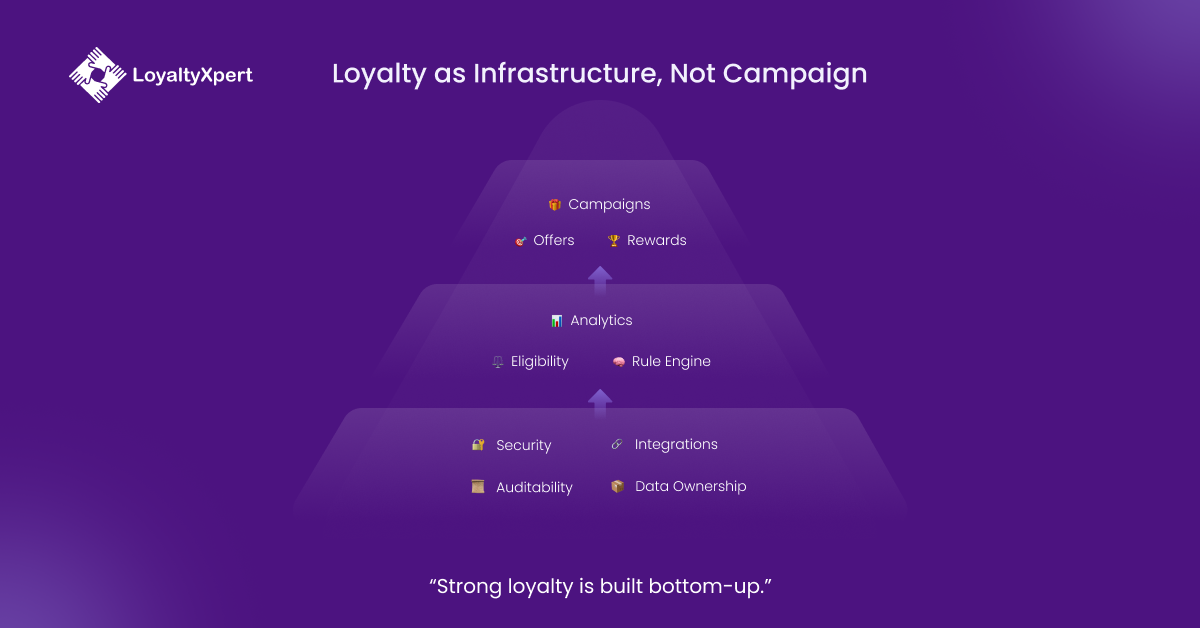
What happens as your loyalty program starts to grow?
As your loyalty program grows, gaps start to show:
- Feature-rich tools struggle with audit requirements
- Manual approvals creep into reward logic
- Data silos form between CRM, billing, and finance
- Reporting lives outside the loyalty management platform
This is where “feature-rich” does not always mean “enterprise-safe.” A strong SaaS loyalty platform must support not just engagement, but also compliance, data integrity, and long-term scalability. Whether you are running a loyalty program for SaaS customers, an app-based loyalty program, or a SaaS reward program tied to subscriptions, the architecture matters more than the interface.
Understanding this distinction early helps businesses avoid costly migrations, internal friction, and loss of trust, especially when loyalty becomes central to retention strategy rather than a supporting tactic.
Tip 1: Choose Configurable Rule Engines, Not Just Campaign Builders
Most loyalty initiatives don’t fail because of poor ideas. They fail because the SaaS Loyalty Platform behind them cannot handle real-world complexity. In demos, campaign builders look impressive with drag-and-drop offers, quick launches, and attractive dashboards. But once the program expands across regions, SKUs, partner tiers, or customer segments, cracks begin to appear.
Out-of-the-box SaaS loyalty solutions are valuable, especially for fast go-to-market. They help teams launch a SaaS loyalty or app-based loyalty program without heavy IT dependency. However, speed to launch should never be confused with readiness to scale.
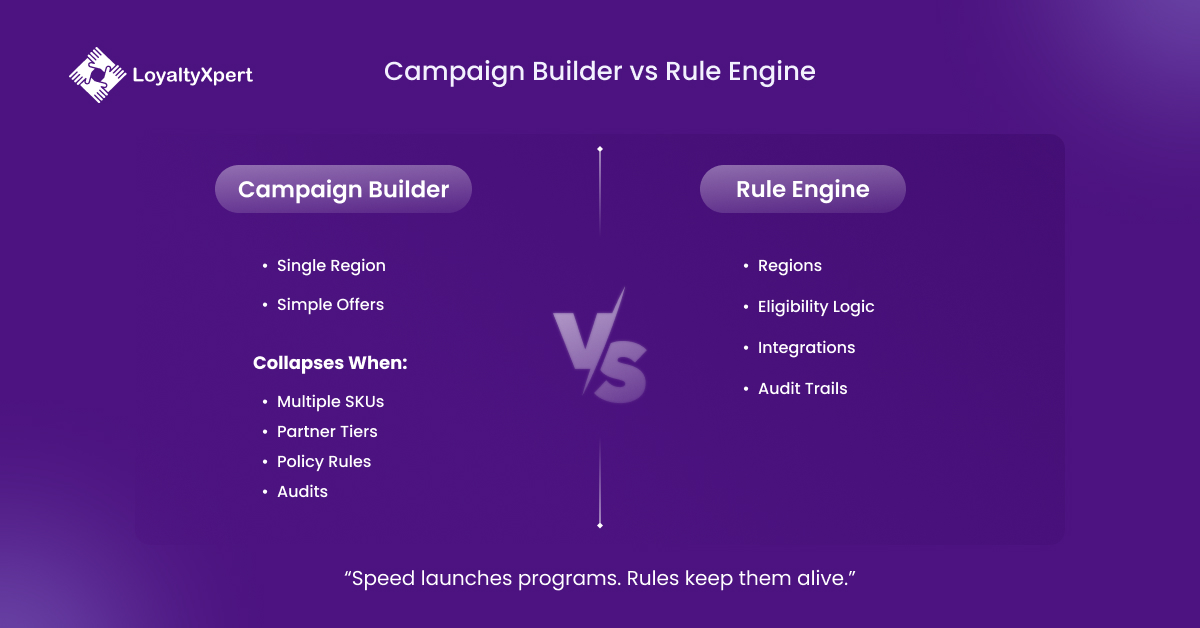
What truly differentiates a mature loyalty management platform is a configurable rule engine. Rule-driven systems allow businesses to define conditional rewards, enforce eligibility criteria, and apply logic based on behavior, geography, or transaction type. This is critical for a loyalty program for SaaS models where billing cycles, upgrades, and renewals vary widely.
Campaign builders focus on what to offer. Rule engines focus on who qualifies, when, and why. When complexity increases, rule engines survive. Campaign builders struggle.
What to look for?
- Rule-based reward triggers instead of static campaigns
- Eligibility logic tied to customer or partner behavior
- APIs that support complex conditions across systems
In SaaS reward programs, the ability to handle complexity is far more valuable than launching fast.
Tip 2: Feature Flexibility Must Support Policy, Not Just Promotions
Flexibility is often misunderstood when evaluating a SaaS loyalty platform. Many platforms advertise customizable rewards, tier programs, and modular features, and while these are important, flexibility without control creates chaos.
Modern SaaS loyalty programs must operate within clear business policies. This is especially true for enterprises and loyalty program companies in India managing multiple teams, regions, and partner ecosystems. True flexibility means the platform supports policy enforcement, not just promotional creativity.
What a robust loyalty program software should allow?
- Eligibility logic to be defined before rewards are issued
- Approval-based overrides for exceptional cases
- Logged and traceable policy exceptions
Without this structure, silent changes creep in. Discounts are adjusted manually. Exceptions are granted informally. Over time, finance loses visibility, and trust in the SaaS loyalty provider erodes.
Feature flexibility should empower teams while protecting governance. Whether you are running a SaaS loyalty program or managing a loyalty program for SaaS subscriptions, your loyalty management platform must balance agility with accountability.
Ask the right questions:
- Can rewards be paused automatically if eligibility changes?
- Are exceptions logged and auditable?
- Does the platform prevent unauthorized rule changes?
In the long run, the best SaaS loyalty solutions are not the ones that offer unlimited freedom, but the ones that keep loyalty programs scalable, fair, and defensible.
💡 Did you know?
Many “flexible” SaaS loyalty platforms allow changes, but don’t record who changed what, when, and why.
Tip 3: Integration Must Be Structural, Not Cosmetic
Many SaaS loyalty platforms claim to be “fully integrated.” In reality, this often means periodic data uploads or surface-level connections. That’s where problems begin. A SaaS Loyalty Platform should not just connect to your systems, but it should become part of them.
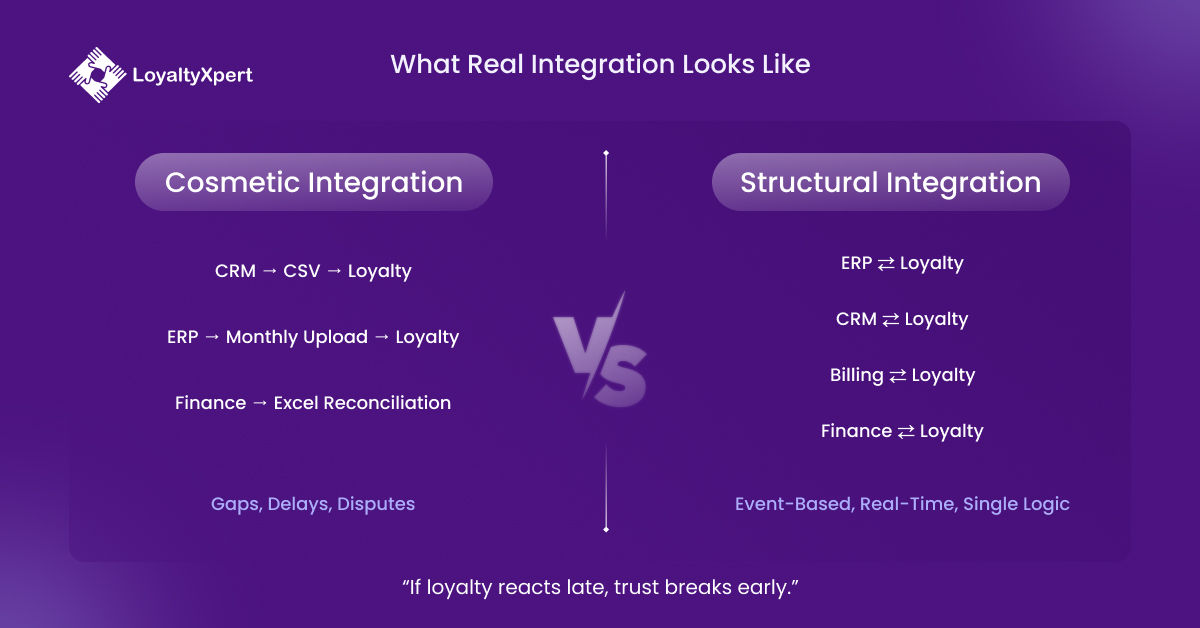
True integration goes beyond CRM links or basic POS syncing. Your SaaS loyalty solutions must align structurally with ERP, billing systems, eCommerce platforms, and partner portals. Especially in a SaaS loyalty or SaaS reward program, reward calculations depend on accurate, real-time data.
What matters most is event-based syncing. When a transaction happens, a renewal is processed, or an exception is raised, the loyalty management platform should react instantly. Weak integration creates reconciliation gaps over time, like missed rewards, disputed points, and manual corrections that quietly increase financial risk.
What to evaluate?
- Event-driven APIs, not batch uploads
- Exception handling built into workflows
- Real-time visibility across CRM, ERP, and loyalty program software
Integration quality decides whether your loyalty program for SaaS scales smoothly or becomes an operational burden.
Tip 4: Loyalty Across the Full Customer & Channel Journey
Loyalty does not start at checkout, and it does not end at redemption. A strong SaaS loyalty platform supports the entire journey, including before, during, and after purchase.
Modern SaaS loyalty programs must also account for channel journeys. Customers, distributors, dealers, and partners often interact across multiple touchpoints such as online portals, offline sales, apps, and support teams. Breaks in this journey create confusion, delayed rewards, and disputes.
Continuity is critical. If customers earn points online but redeem offline or partners sell through multiple routes, the loyalty management platform must maintain a single, consistent logic. This is especially important for loyalty program companies in India managing hybrid models.
What to look for?
- Unified journeys across online and offline channels
- Partner and channel loyalty support
- Clear reward logic that avoids overlap and disputes
When journey gaps exist, trust erodes. When journeys connect seamlessly, loyalty feels effortless.
Tip 5: Cloud, Security & Native Auditability
Security is no longer just an IT concern, but it’s a business requirement. While SaaS loyalty platforms offer speed and scalability, enterprises must evaluate how well these platforms handle governance and audits.
Some organizations still prefer on-premise systems due to data sensitivity. However, modern SaaS loyalty solutions now offer enterprise-grade cloud security, encryption, and access controls. The bigger differentiator today is native auditability.
No CTA found.
Audit failures rarely happen inside the platform. They happen in spreadsheets, exports, and manual reconciliations outside of it. A reliable SaaS loyalty provider should maintain decision history, reward justification, and approval of audit trails within the system, not in Excel files.
What are the key capabilities to assess?
- Built-in audit trails and logs
- Transparent reward calculation history
- Secure, compliant data storage
In the long run, the safest loyalty program software is one you don’t have to defend during audits. Native auditability turns your SaaS loyalty platform into a system of record, not just a marketing tool.
Tip 6: Analytics, Insights & Loyalty ROI Measurement
Many loyalty initiatives fail quietly, not because customers disengage, but because leadership cannot clearly see what the program is actually delivering. This is where a strong SaaS Loyalty Platform separates itself from basic loyalty program software.
Modern SaaS loyalty is no longer about vanity dashboards showing points issued or redemptions. Decision-makers need finance-grade visibility. Your SaaS loyalty solutions should clearly answer three questions: Why was this reward given? Should it have been given? What business outcome did it drive?
Look for analytics that go beyond marketing metrics. Predictive insights should help you adjust reward structures, identify leakage, and forecast ROI across cohorts, channels, and partners. For a SaaS loyalty program to scale, analytics must support both growth teams and finance teams without manual reporting.
What to evaluate?
- Real-time dashboards with revenue-linked metrics
- ROI tracking tied to behavior, not just transactions
- Audit-ready reward logic inside the loyalty management platform
When analytics tell a clear business story, loyalty becomes an investment, not an expense.
💡 Did you know?
Analytics that only show points and redemptions answer marketing questions, not business questions.
Tip 7: Data Ownership, Scalability & Future Readiness
Choosing a SaaS loyalty provider is not just a software decision. It is a long-term data decision. As your loyalty program for SaaS matures, the real asset is not points or rewards. It is behavioral data.
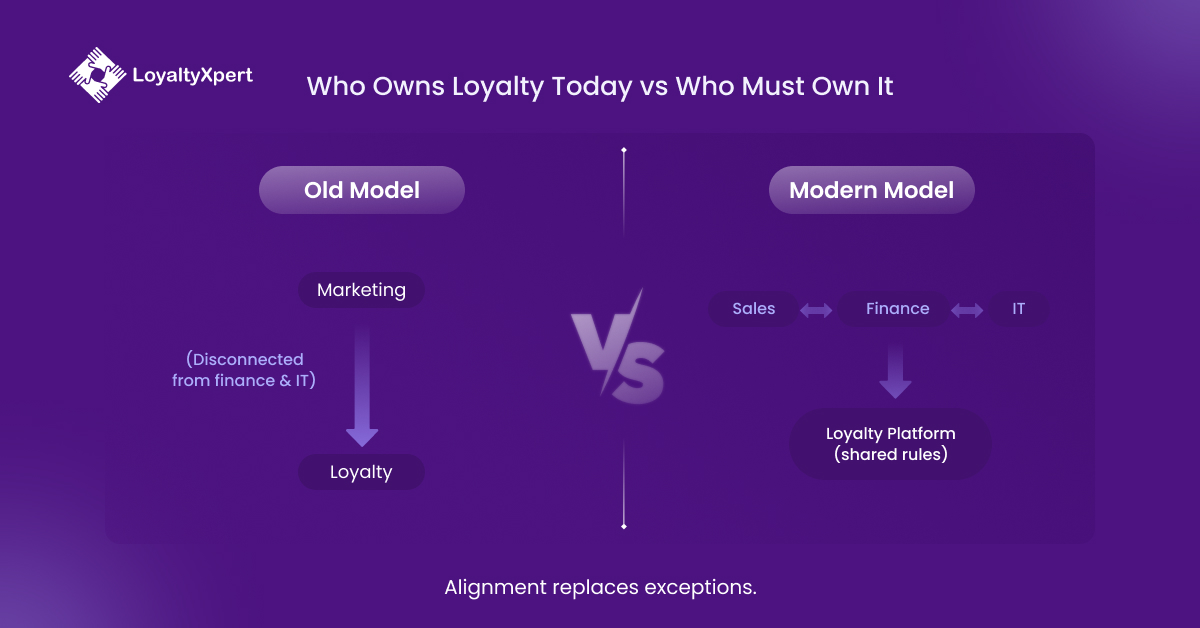
Enterprises must retain manufacturer-level ownership of raw loyalty data. Your SaaS Loyalty Platform should give you clear access rights, data portability, and the ability to integrate insights across Sales, Finance, and IT. Without this, scalability turns into vendor dependency.
Proof of concept and pilot testing still matter, but they should test more than features. They should test scalability under real load, cross-functional usability, and future readiness for new markets, channels, or app-based loyalty program expansions. This is especially critical for loyalty program companies in India, managing rapid growth and regional complexity.
What to validate early?
- Full access to raw and processed data
- Scalability without performance or cost shocks
- Readiness for cross-functional ownership
A future-ready SaaS loyalty platform grows with your business without locking you into yesterday’s decisions.
Types of Loyalty Programs the Platform Should Support
As loyalty programs expand, businesses rarely run just one model. A future-ready SaaS Loyalty Platform must support multiple program types within the same system without creating silos or manual dependencies.
An effective platform should enable:
- Core loyalty programs such as points-based, tiered, subscription, cashback, gamification, referral, and “surprise & delight” models. These form the foundation of most SaaS loyalty strategies and must be configurable without heavy development.
- Channel and partner loyalty programs for distributors, dealers, and resellers. Rewards here are driven by performance, compliance, and eligibility, not just transactions, making this critical for B2B-focused organizations.
- Eligibility-driven loyalty programs, where qualification rules are evaluated before rewards are issued. This prevents leakage and ensures policy-led reward distribution.
- Hybrid B2B + B2C loyalty structures, allowing customers, partners, and influencers to coexist within one loyalty management platform, using shared data but distinct rules.
If your platform cannot handle this mix natively, scale will quickly expose its limits.
Benefits of a Modern SaaS Loyalty Platform
The true value of a modern SaaS Loyalty Platform is not how many features it offers, but how smoothly it operates across teams and use cases. When designed well, it becomes an enabler of clarity rather than complexity.
Key outcomes include:
- Reduced reward disputes, because rules, eligibility, and calculations are transparent and consistently applied across the system.
- Easier audits and compliance, supported by cloud-native architecture and built-in traceability instead of manual exports and reconciliations.
- Faster governance decisions, as sales, finance, and leadership teams work from the same data and logic.
- Lower internal friction, since the SaaS loyalty program aligns incentives with policy instead of relying on exceptions.
For loyalty program companies in India operating at scale, these outcomes matter more than cosmetic innovation. The right loyalty program software delivers predictability, control, and long-term confidence, and that’s exactly what growing organizations need.
Conclusion: Choose a Platform You’ll Never Have to Defend
A well-designed SaaS Loyalty Platform is no longer just a growth lever, but it is a business system that impacts revenue integrity, partner trust, and internal alignment. As loyalty programs scale, what matters most is not novelty, but predictability. The right platform is one that can stand up to audits, grow without constant renegotiation, and align Sales, Finance, and IT around the same rules instead of creating friction between teams.
This is where many organizations rethink their approach to SaaS loyalty. At LoyaltyXpert, loyalty is built as a long-term infrastructure, not a short-term campaign. Our platform is designed to support governed growth, transparent rewards, and enterprise-grade scalability, so loyalty decisions never need defending later.
If you are evaluating a loyalty platform that must perform today and hold up tomorrow, contact us to explore how LoyaltyXpert can fit your business. You can also request a demo to see how a future-ready SaaS loyalty solution works in real operating conditions.